

 नेपाली

Kaberi Poudel
Published: September 17, 2026
Nepal’s wetlands are becoming quieter.
The latest waterbird census shows that fewer birds are using some of the country’s major wetlands, while the variety of species recorded at several sites has also declined.
Across major monitoring locations, 90,688 aquatic birds were counted in 2026, compared with 96,565 in 2025. During the same period, the number of recorded species fell from 94 to 89.
The numbers offer a glimpse into a broader problem: wetlands that once served as important feeding, resting and wintering grounds for migratory birds are facing growing pressure from human activity and environmental change.
The decline is visible across major wetlands
The latest monitoring found a decline in species diversity at around half of the surveyed sites.
Koshi Tappu Wildlife Reserve, Barju Lake, Jagadishpur Reservoir, Ghodaghodi Lake, Rara Lake, Pokhara Valley’s lakes, Taudaha and parts of the Bagmati river corridor were among the areas where fewer species were recorded than the previous year.
The reasons are not limited to one factor.
Wetland encroachment, pollution, changing land use, declining water availability and habitat degradation are putting pressure on birds that depend on these ecosystems.
Agricultural activity is another concern. The increasing use of chemical pesticides can affect the insects and other organisms that form part of birds’ food chains, while changes in farmland can also remove important feeding areas.
In some wetlands, invasive aquatic plants are creating another barrier.
Water hyacinth, for example, can spread rapidly across open water, reducing the areas available for birds to forage.
Human disturbance is also becoming increasingly difficult to ignore. Construction around lakes, unmanaged waste, loud recreational activities and poorly planned infrastructure can turn otherwise suitable habitats into increasingly unsuitable environments.
Koshi Tappu shows how much can change
Koshi Tappu has long been regarded as one of Nepal’s most important wetland areas for birds.
But conservationists say the landscape has changed considerably.
Natural oxbow lakes and marshes have declined or dried in parts of the area following changes in the Koshi River system. The impact can be seen in waterbird numbers.
Areas that once attracted enormous flocks of ducks now sometimes record only a fraction of those numbers.
That change matters because wetlands are not simply places where birds gather.
They are feeding stations, resting points and energy sources for birds travelling across thousands of kilometres.
Nepal is one stop on a much bigger journey
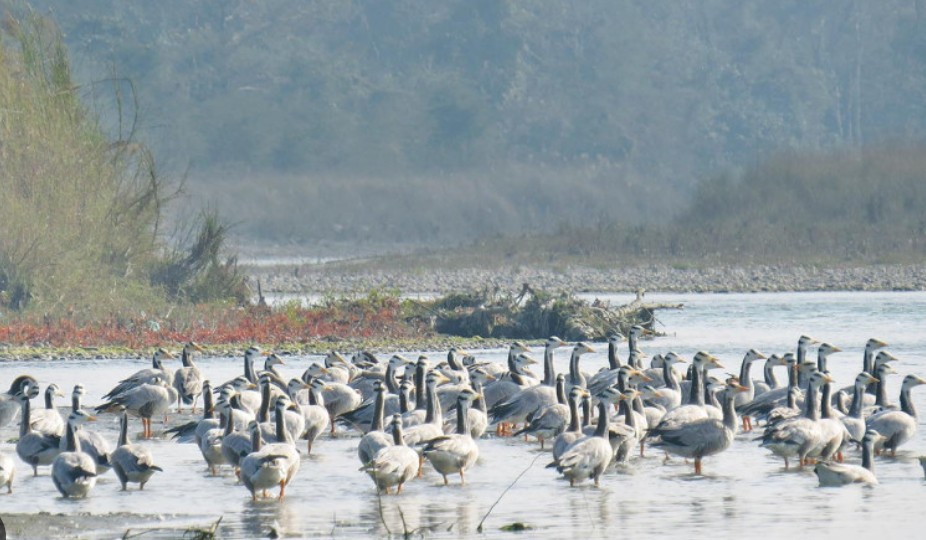
Many of the birds arriving in Nepal during winter have travelled from much colder parts of Asia.
Nepal lies along the Central Asian Flyway, a major migration route connecting breeding and wintering areas across the region.
Around 150 bird species are estimated to migrate to Nepal during winter, most of them waterbirds. Some travel thousands of kilometres before reaching Nepal’s lakes, rivers, marshes and other wetlands.
For these birds, Nepal is not the final destination of their entire life cycle. It is one important part of a much longer journey.
That makes the condition of Nepal’s wetlands a regional conservation issue.
If an important stopover or wintering site disappears, birds may lose a place they depend on for food and rest during migration.
The global picture is also worrying
The problem extends well beyond Nepal.
The recently released State of the World’s Birds report assessed 1,843 migratory bird species worldwide and found that 45 percent are experiencing population declines.
Around 11 percent are considered threatened with global extinction.
Habitat destruction, pollution, illegal hunting and trapping, climate change, agricultural expansion, invasive species and infrastructure development are among the major pressures identified globally.
For Nepal, these global trends add urgency to the condition of its own wetlands.
Protecting a wetland means more than protecting its boundary
Conservationists say simply declaring a wetland protected does not guarantee that it will remain ecologically healthy.
The quality of its water matters.
So does the natural flow of water, availability of food, condition of surrounding land, control of invasive species and the level of human disturbance.
Development planning also needs to consider bird habitats.
Roads, transmission lines, hydropower projects, irrigation infrastructure, urban expansion and renewable-energy projects can create risks for birds if migration routes and important habitats are not considered during planning.
At the same time, Nepal is not seeing declines everywhere.
Some areas—including parts of Dhanusha, the Kamala River, Hetauda, Lumbini, the Babai and Rapti river systems, Shuklaphanta and the Manohara floodplains—recorded improvements in bird numbers or species diversity in the latest census.
That suggests conservation and habitat management can make a difference.
But the wider trend remains a warning.
Nepal’s wetlands are part of a migration network that stretches far beyond the country’s borders. Protecting them therefore requires more than protecting individual lakes or counting birds once a year.
It requires long-term monitoring, better wetland management, responsible development and cooperation among countries connected by the same flyway.
For migratory birds, a journey of thousands of kilometres may depend on a single safe place to stop.
And in Nepal, some of those safe places are already becoming harder to find.
Source/Reference: Waterbird census data, State of the World’s Birds report, Kathmandu Post and other publicly available conservation sources.