

 नेपाली

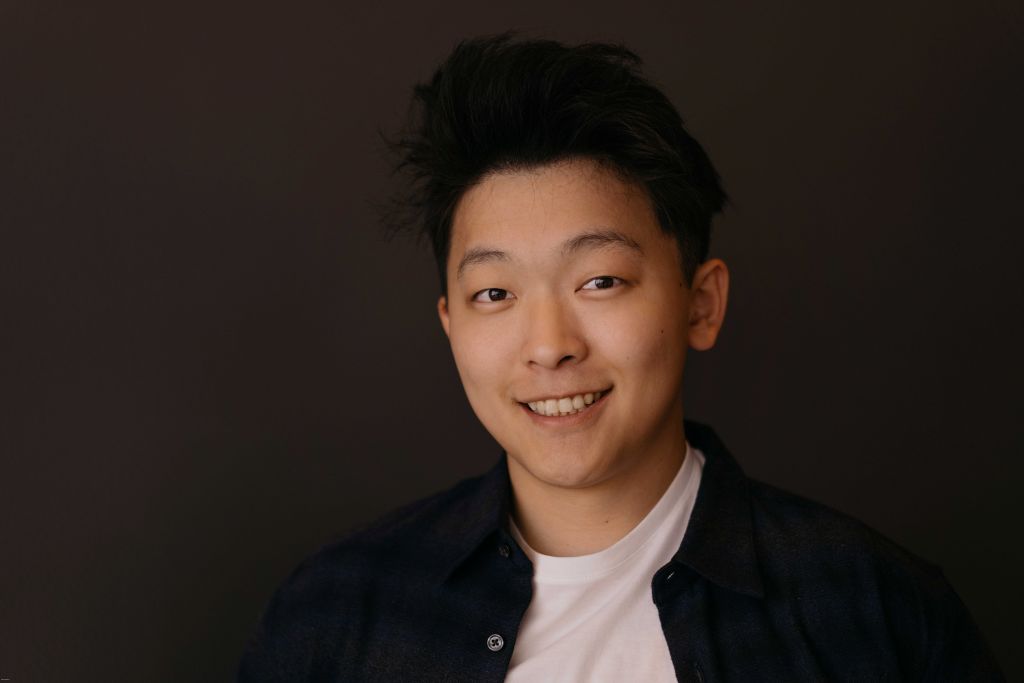
At 17, Sigil Wen left Toronto for Silicon Valley. Instead of going to college, the self-taught programmer spent nearly a year inside an AI hacker house, working alongside researchers and founders who would go on to shape some of the biggest names in artificial intelligence.
Now, the 22-year-old Thiel Fellow is trying to build something of his own.
Wen has launched Underdog, an invite-only AI assistant developed by his startup Conway Research. Its defining pitch is simple: the AI runs on the user’s own hardware rather than sending personal information to a cloud data centre.
Underdog currently runs on Mac and Windows computers, with mobile and Linux versions planned. The system uses a 27-billion-parameter reasoning model derived from Qwen3.8-27B, together with Husky, an inference engine Wen built to make local AI models run more efficiently.
The idea reflects Wen’s long-standing interest in running powerful AI locally. His own account says he managed to run GPT-2 on an Apple Watch in 2023 and later worked on bringing Whisper to the iPhone during his time at Airchat. He now describes Conway Research as an AI lab focused on models that can operate quickly on consumer devices.
Wen’s background is unusually connected to Silicon Valley’s AI boom. He says that while living in the hacker house, he worked around people associated with projects including GPT-3, DALL·E, Whisper, Stable Diffusion and Midjourney. Anthropic co-founder Ben Mann gave him early access to a chatbot that later became Claude, while Midjourney founder David Holz showed him an early version of his image-generation technology.
He later helped Naval Ravikant launch Airchat, where he worked on the product and recruited much of its engineering team. In 2025, Wen received the Thiel Fellowship, which supports young founders who choose to pursue ambitious projects outside the traditional university route.
Privacy became a particularly personal motivation for Wen. Andreessen Horowitz says an incident involving a bug in an email application exposed Wen’s private emails to other users. That experience helped shape his belief that increasingly capable personal AI should not require users to surrender control of their data.
Underdog is also taking a different approach to monetization. Wen says the product will initially be free and ad-free, with the company instead planning to earn revenue from a small percentage of transactions made through the assistant. The logic is that if inference happens locally, Conway does not carry the same cloud-computing costs as conventional AI assistants.
That model has attracted serious backing. Conway Research has raised support from Andreessen Horowitz, Khosla Ventures, Hummingbird, SV Angel and the Anthology Fund, along with angels including Stripe co-founder Patrick Collison, Vercel founder Guillermo Rauch and OpenAI researcher Noam Brown. Andreessen Horowitz says it is leading Conway’s first funding round.
The bigger bet is on where personal AI is heading.
Cloud-based assistants have made AI increasingly powerful, but they also require users to hand over increasingly sensitive information, emails, documents, calendars, purchases and personal preferences. Wen’s argument is that the next generation of assistants should be capable of acting on that information without taking ownership of it.
That makes Underdog less about building another chatbot and more about testing a different architecture for consumer AI: put the intelligence on the device, keep the data with the user, and find a business model that does not depend on advertising or data collection.
Whether local models can consistently match the capability of the largest cloud systems remains an open question. But Wen is betting that improvements in smaller models and consumer hardware will make that gap increasingly difficult to justify.