
 नेपाली

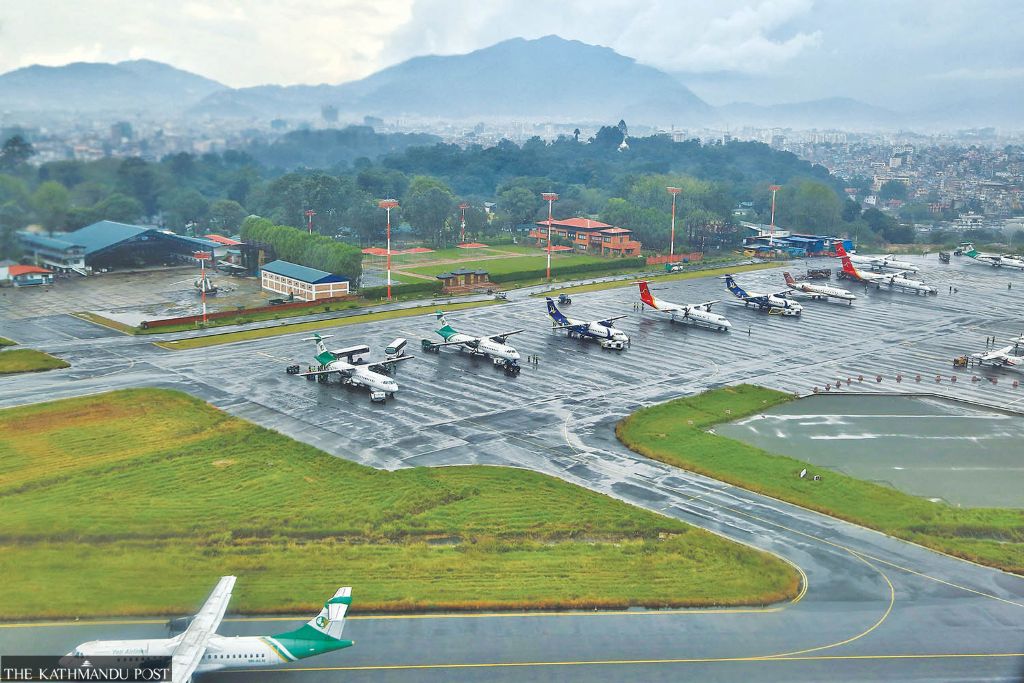
Kathmandu’s Tribhuvan International Airport is set for a major air traffic control upgrade, with Japan providing a Rs 2.77 billion grant to modernize its aging ATC infrastructure.
Japan and Nepal signed the grant agreement on October 8, with Japanese Ambassador Maeda Toru and Finance Secretary Ghanshyam Upadhyaya exchanging the notes for the ¥2.853 billion grant.
The project goes far beyond upgrading the airport’s control tower. Japan will support the rehabilitation of the ATC tower and modernization of communication, navigation, surveillance and air traffic management systems in line with International Civil Aviation Organization standards.
Critical supporting infrastructure—including power and UPS systems, HVAC, fire protection and security systems—will also be upgraded. Technical training will further strengthen Nepal’s ability to operate and maintain the new systems.
Why does this matter?
TIA operates in the challenging geography of the Kathmandu Valley, surrounded by high terrain and exposed to rapidly changing weather. At the same time, passenger and aircraft movements have grown significantly over the years, putting greater pressure on the airport’s existing infrastructure.
The upgrade is therefore aimed not simply at handling more flights, but at improving safety margins, traffic-management efficiency and the continuity of airport operations.
Another important element is disaster resilience.
Japan says the upgraded systems will help TIA remain more resilient during disasters and climate-related risks. That matters because the airport is not only Nepal’s main international gateway—it also plays an important role in receiving emergency assistance and maintaining connectivity during crises.
A four-decade aviation partnership
Japan’s involvement in Nepal’s aviation safety system goes back decades. JICA says Japan and Nepal have cooperated on aviation safety and air traffic management since 1988, including support for radar, navigation, surveillance and technical capacity.
The timing is also significant: 2026 marks 70 years of diplomatic relations between Nepal and Japan.
For passengers, the immediate impact may not be a sudden drop in ticket prices or the disappearance of flight delays. The bigger change will be behind the scenes: better systems for communicating with aircraft, monitoring airspace, managing traffic and keeping the airport operational when conditions become difficult.
For a country whose aviation network is increasingly important for tourism, trade, emergency response and national connectivity, modernizing that invisible infrastructure could be just as important as expanding the airport itself.