
 नेपाली

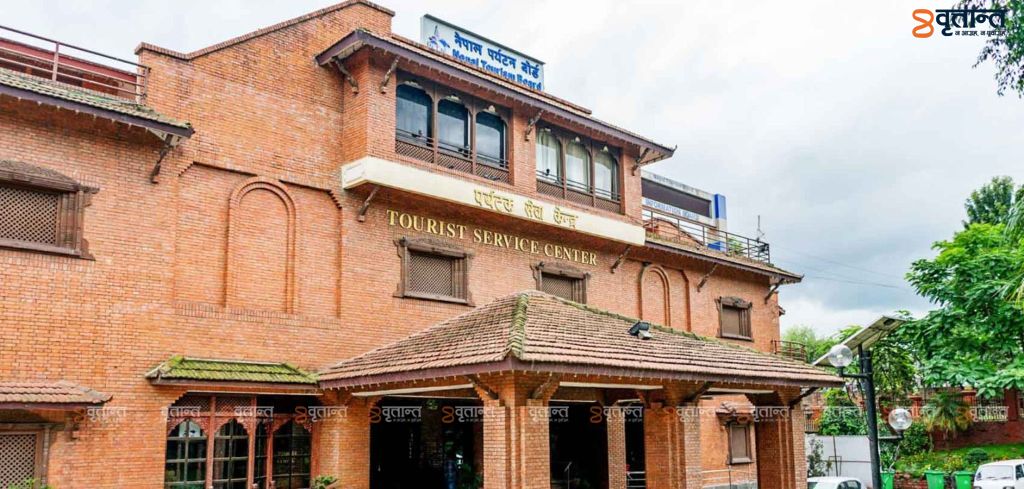
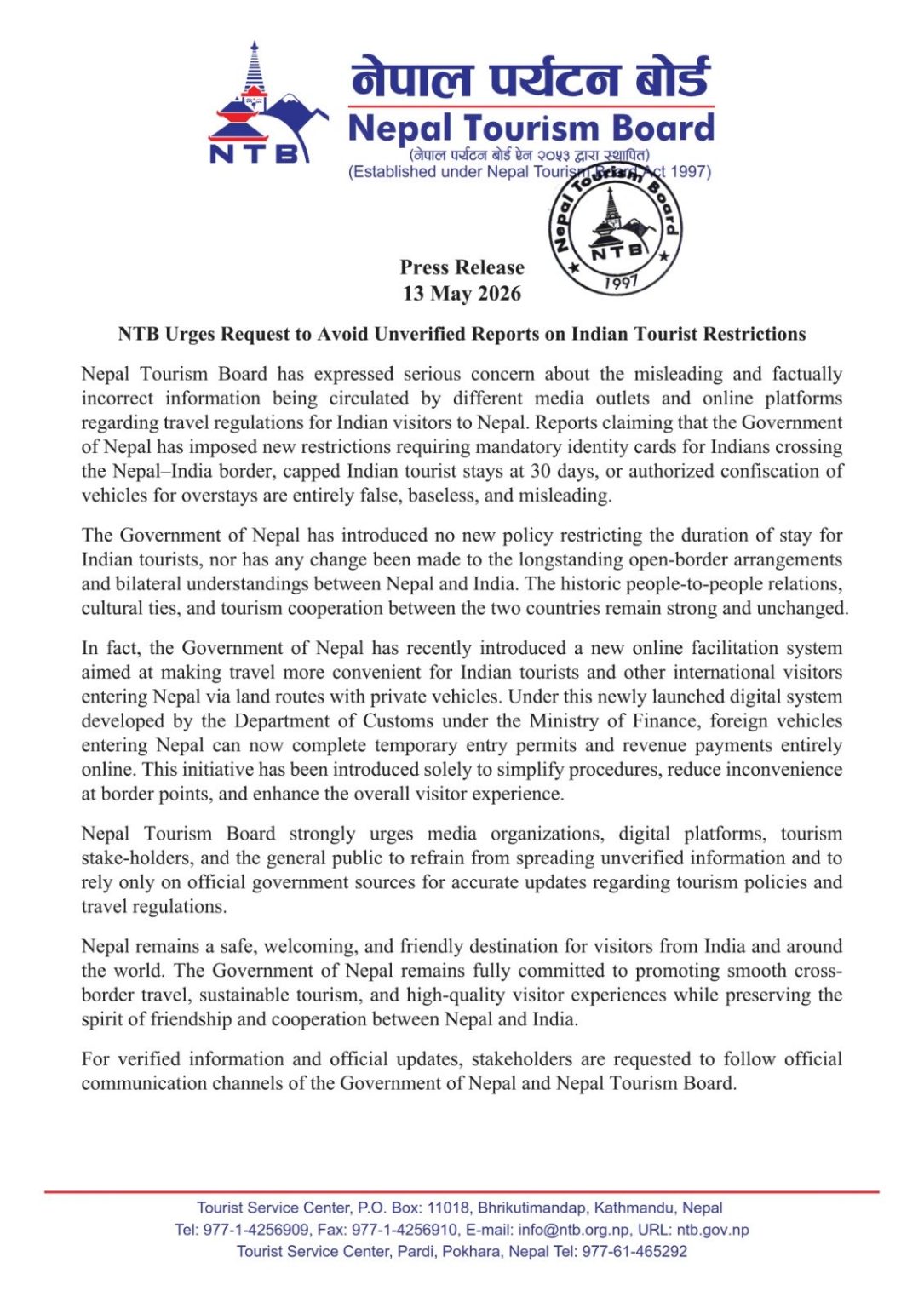
Kathmandu, The Nepal Tourism Board (NTB) has dismissed media reports claiming that Nepal has imposed new restrictions on Indian tourists, calling such information false, baseless and misleading.
In a statement issued on Wednesday, the NTB expressed serious concern over reports circulated by various media outlets regarding travel regulations for Indian nationals visiting Nepal.
The Board clarified that there are no new rules requiring mandatory identity cards for Indians crossing the Nepal-India border, no 30-day limit on tourist stays, and no policy allowing authorities to confiscate vehicles due to overstays.
According to the NTB, Nepal continues to remain a safe, welcoming and friendly destination for visitors from India and around the world. The government, it said, remains committed to promoting smooth cross-border travel, sustainable tourism and quality visitor experiences while preserving the long-standing friendship between Nepal and India.
The Board also stated that the Government of Nepal has not introduced any new policy restricting the duration of stay for Indian tourists. Likewise, no changes have been made to the traditional open-border arrangements and bilateral understandings between the two neighbouring countries.
“The historic people-to-people relations, cultural ties and tourism cooperation between Nepal and India remain strong and unchanged,” the statement said.
The NTB further informed that the government has recently launched a new online facilitation system aimed at making travel easier for Indian tourists and other foreign visitors entering Nepal through land routes with private vehicles.
Under the digital system developed by the Department of Customs, foreign vehicles entering Nepal can now complete temporary entry permits and revenue payments online.
According to the Board, the initiative was introduced solely to simplify border procedures, reduce inconvenience and improve the overall travel experience for visitors.
The NTB has urged media organisations, tourism stakeholders and the public not to spread unverified information and to rely only on official government sources for updates related to tourism policies and travel regulations.